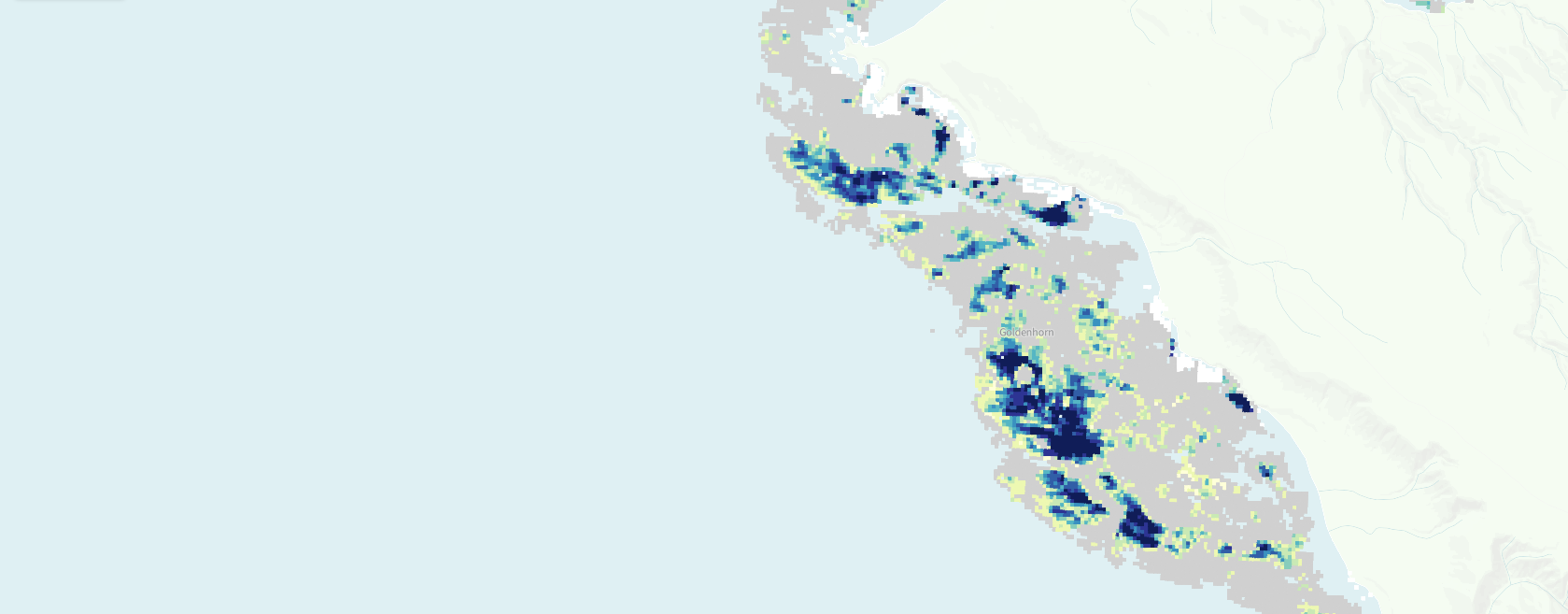
Kelpwatch.org design and development
The Nature Conservancy California
GreenInfo team: Dan Rademacher, Tim Sinnott, Tom Allnutt
Project years: 2022-2023
Tags: Cartography Environment GIS Services Interactive Solutions Web Mapping Website Design
Overview
What challenges is this project trying to solve?
- Kelp forests are a crucial part of Earth's ecosystems, and with new technologies, it has become possible to estimate the presence and size of kelp forests, and observe how they change over time.
What were the client’s objectives?
- TNC California's objective was to track kelp population estimates on a visual and interactive map that users can access.
Results
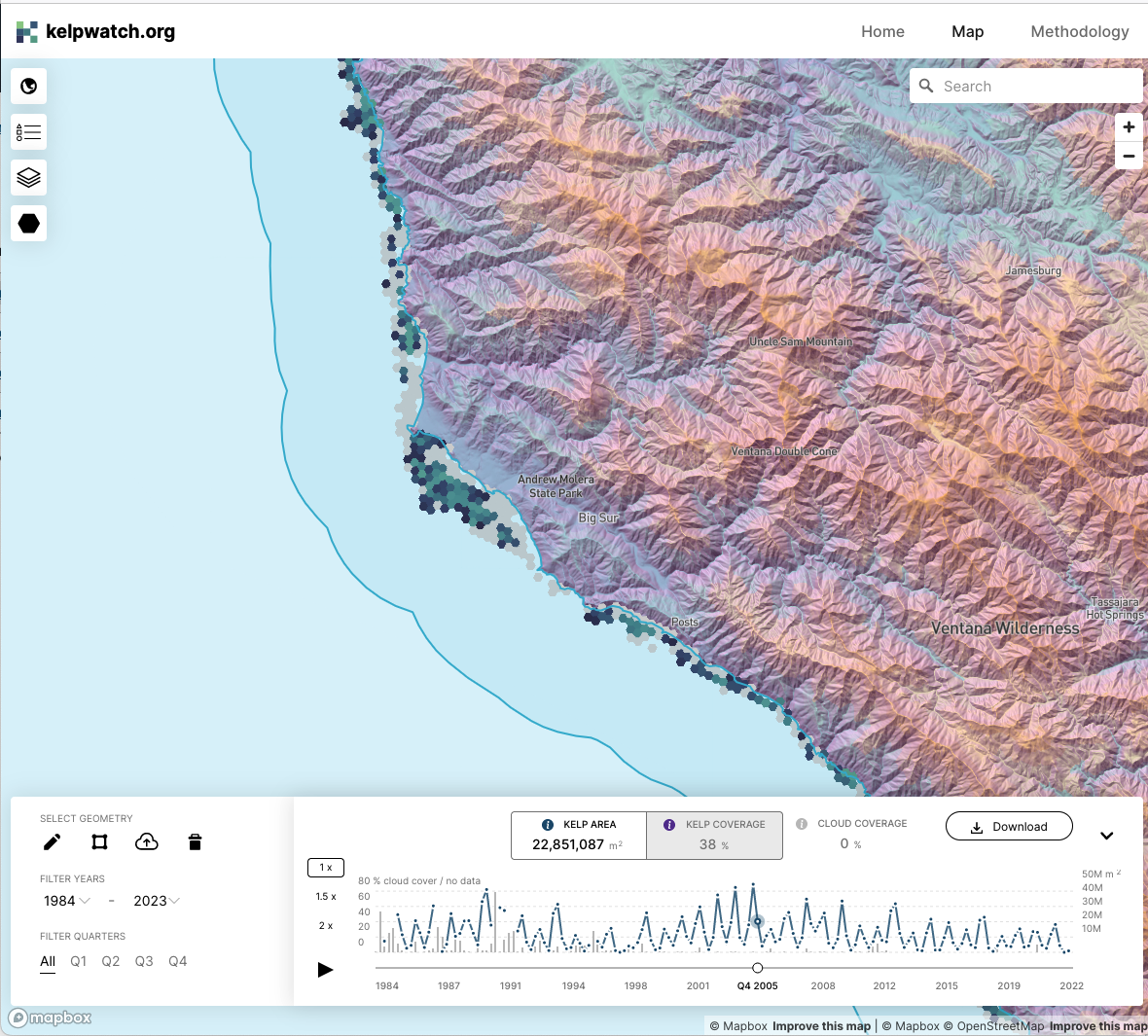
- The resulting kelpwatch.org is an interactive website to visualize the change in kelp population across a global timeline.
The Work
Working with academic and government partners, TNC staff had designed, built, and launched kelpwatch.org as an MVP demonstrating how earth observation data can be made actionable in California. They came to GreenInfo and we recruited help from our partners at Development Seed to grow the site into the world’s largest dynamic map of canopy-forming kelps to add a file upload component to kelpwatch.org.
Project Timeline
In 2022, Development Seed led the way in rebuilding the data pipeline and backend processes to improve efficiency and make the process of quarterly data updates as quick and seamless as possible. Then DevSeed and Greeninfo worked together to build a new file upload service and user interface to allow users to upload shapefiles, KMLs, or GeoJSON for repeatable and larger area reporting than had been possible with the site’s existing simple drawing tools.
Next, with the backend data processing and upload features deployed, we embarked on parallel work to add more regions beyond the West Coast of North America while also undertaking design research and user engagement to guide future feature development based on a clear sense of user needs and what similar tools in other domains offer.
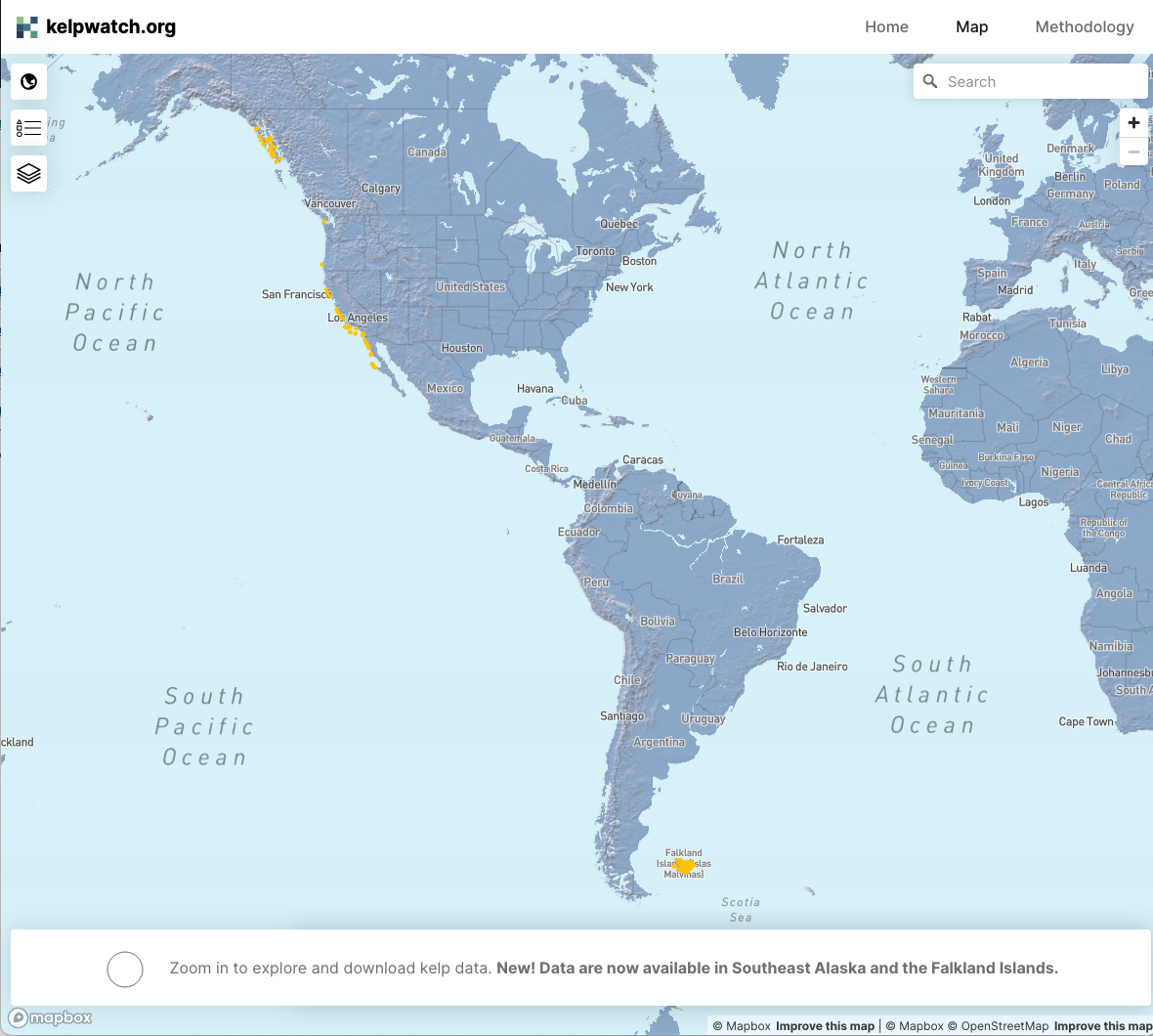
In June 2023, TNC’s Kelp Mapping and Monitoring team and partners released new version of Kelpwatch.org that included two new geographies: the Falkland Islands and Southeast Alaska. The new release of Kelpwatch.org represents the first time that kelp canopy has been dynamically mapped and visualized on a regional scale in the Southern Hemisphere and made available publicly.